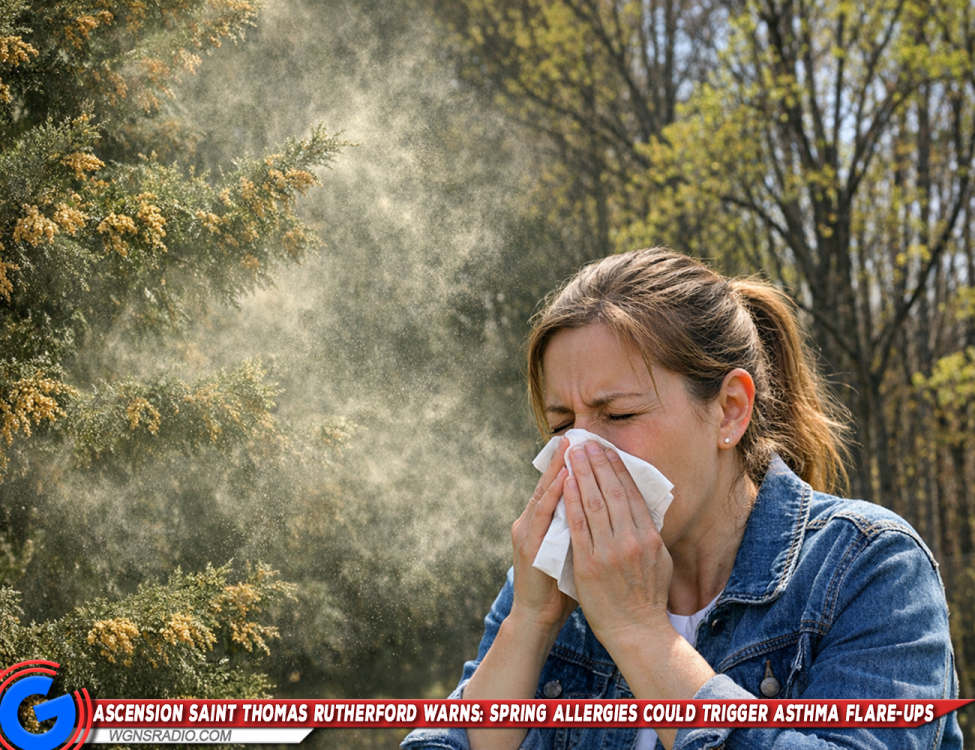

MURFREESBORO, TN (WGNS) - As spring settles into Middle Tennessee, physicians at Ascension Saint Thomas Rutherford say they’re already seeing the first signs of an active allergy season—and they’re urging anyone with asthma to take extra care. Meteorologists report that pollen counts are climbing earlier than usual, with juniper, maple, alder and elm leading the way. With warm temperatures and gusty winds in the forecast, pollen levels are expected to stay in the moderate to high range through much of March and April.
Doctors explain that this combination of early blooms and breezy weather can be tough on people with asthma. Pollen and other airborne allergens irritate the airways, which can lead to wheezing, coughing, chest tightness and shortness of breath. Outdoor allergens like pollen and mold remain among the most common triggers for allergic asthma, and flare‑ups often begin before people realize pollen season has fully arrived.
Physicians encourage patients to pay close attention to early warning signs—persistent coughing, wheezing, or feeling more winded than usual after being outside. They also stress the importance of seeking medical care if symptoms worsen or don’t improve with prescribed medications. Severe breathing difficulty, trouble speaking in full sentences, or chest tightness that continues to intensify may require immediate attention in an emergency department.
Doctors note that certain symptoms should never be ignored. Extreme shortness of breath, blue or gray lips or fingernails, chest pulling in while breathing, or sudden fatigue and confusion can signal dangerously low oxygen levels. In those situations, emergency care is essential.
To help reduce the risk of flare‑ups, physicians recommend monitoring daily pollen counts, limiting outdoor activity when levels are high, and keeping windows closed at home and in the car. Showering and changing clothes after being outdoors can help remove pollen, and staying consistent with prescribed asthma and allergy medications remains key. Keeping rescue inhalers close at hand is also important during peak allergy months.
Experts add that allergy seasons are starting earlier and lasting longer nationwide as warmer temperatures extend the time plants release pollen. That means Middle Tennessee residents may feel the effects sooner—and for more weeks—than in years past.